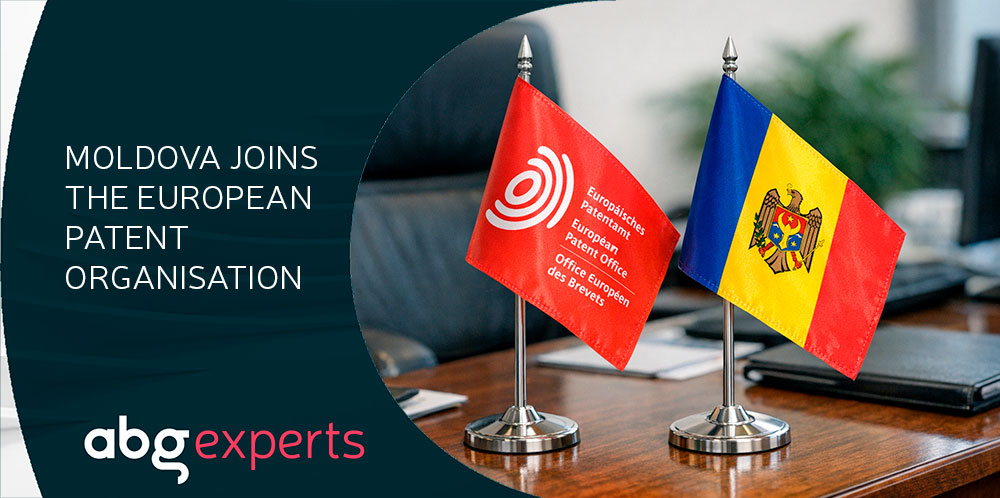
On 1 June 2026, the Republic of Moldova is due to become the 40th Contracting State of the European Patent Organisation (EPO).
After almost seven years of procedural steps, Moldova deposited its instrument of accession to the European Patent Convention (EPC) on 25 March 2026, thereby taking the final step in a process that began with the country’s formal request to accede to the EPC in February 2019.
Moldova moves from validation state to EPC Contracting State
Co‑operation between the EPO and the Republic of Moldova dates back to the mid‑1990s and developed significantly with the signing of a validation agreement in October 2013, which entered into force on 1 November 2015.
As of that date, applicants seeking patent protection for their inventions in Moldova can use the European route, without the need to file a separate national patent application. To that end, Moldova has to be designated as a validation state and the corresponding validation fee (currently EUR 200) has to be paid during the prosecution of the European patent application, within a maximum period of six months from the publication of the application.
This additional procedural requirement will, however, cease to apply as from 1 June 2026. Upon Moldova’s accession to the European Patent Convention (EPC), the country will be designated by default, together with the other 39 EPC Contracting States. As a result, it will be possible to designate 40 countries in a single European patent application without the need to pay any additional validation or extension fees.
What remains unchanged is that, once a European patent has been granted, a full translation of the patent into Romanian must still be filed with the State Agency on Intellectual Property of the Republic of Moldova (AGEPI) in order for the patent to take effect in that country.
Patents in Moldova

Moldova is a small, landlocked country in Eastern Europe, bordering Romania and Ukraine. It has a population of 2.6 million inhabitants, and its GDP per capita stood at USD 7,576 in 2024, according to World Bank data. The Moldovan economy is predominantly agricultural, with vineyards, cereals, sunflower and sugar beet production forming the backbone of the primary sector.
According to figures published by AGEPI, 58 patent applications were filed in 2025, of which 49 were filed by Moldovan applicants. These figures point to an active inventive environment relative to the size of the economy, although the absolute number of filings remains modest. In the Global Innovation Index, WIPO ranks Moldova 68th out of 136 economies analysed, while also identifying it as a country that performs above expectations in innovation given its level of economic development.
AGEPI data further show that 928 requests for validation in the Republic of Moldova were filed in 2025. By way of comparison, in Morocco—another validation state—this figure has been around 2,200 requests for validations per year over the past five years.
Integration into the European Patent Organisation
By acceding to the European Patent Convention, the Republic of Moldova will not only participate fully in the centralised European patent grant procedure, but will also be represented on the Administrative Council of the European Patent Organisation alongside the other EPC Contracting States.
This situation is comparable to that which arose in 2022 with the accession of Montenegro. At that time, some critical voices pointed out that the inclusion of states with relatively low patent filing activity could complicate decision‑making within the Administrative Council, where all member states enjoy equal voting rights regardless of their volume of patent activity.
It should be recalled that the European Patent Organisation was founded in 1977 by seven states and that, on 1 June 2026, it will comprise 40 member states. This makes the European patent system a notable example of successful international co‑operation in support of innovation and economic growth across Europe.
The next state to join the Organisation could be Bosnia and Herzegovina, as the Administrative Council of the EPO issued the official invitation for its accession in October 2024. At present, the date on which the country is expected to deposit its instrument of accession has not yet been announced.